Sleep and recovery
Recovery After 50: What Your Training Week Actually Needs
Recovery is not time lost between workouts. It is where the work becomes repeatable, especially when sleep, stress and ordinary life compete for capacity.
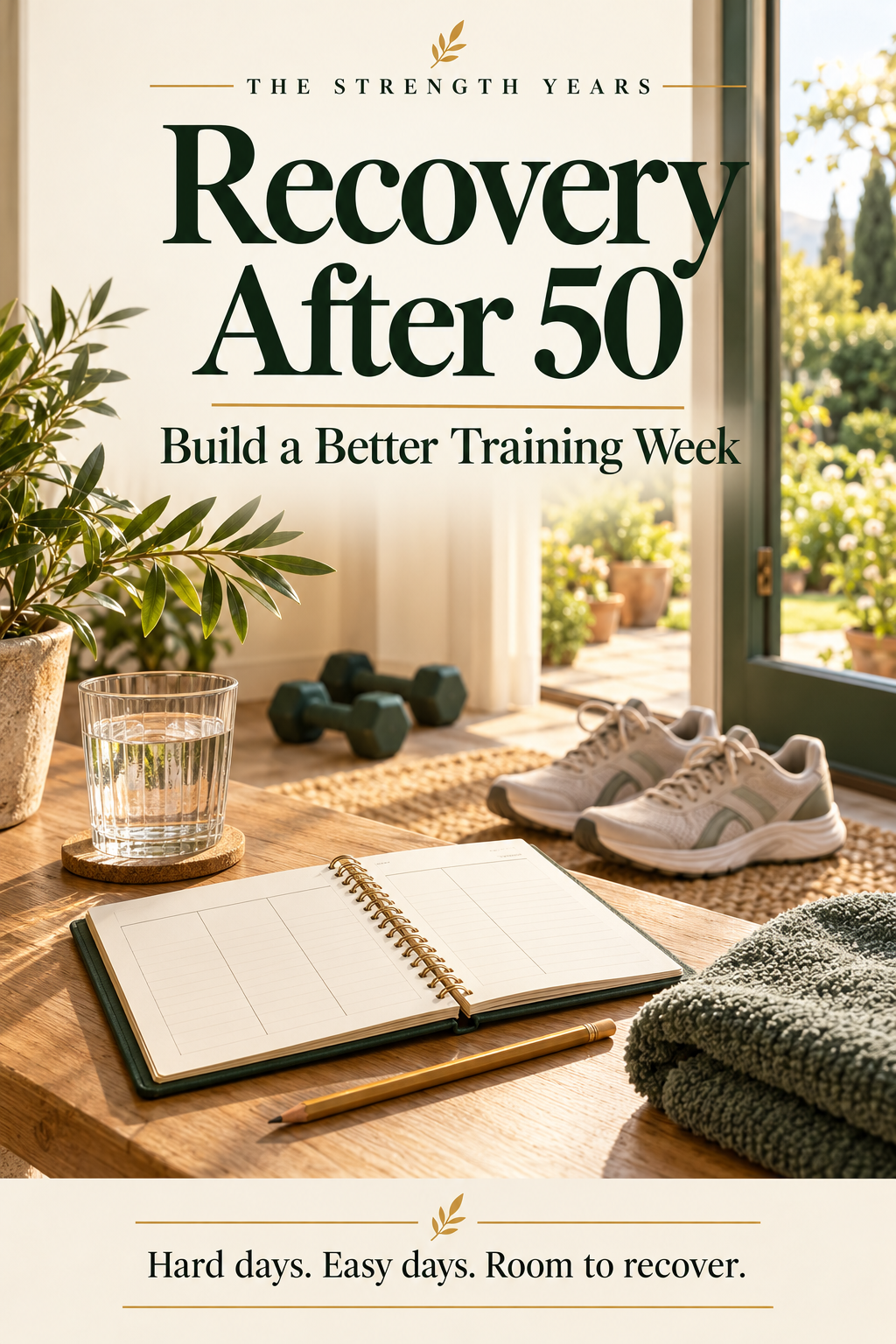
Recovery is part of the programme
Training creates a demand; recovery is the period in which you adapt and become ready to train again. Treating every day as a test usually makes progress less predictable, not more impressive.
Use a hard-and-easy rhythm
Separate demanding strength sessions with easier days. Walking, mobility or ordinary daily activity may fit between them. If you also run, cycle or play sport, count those demands rather than pretending they happen outside the programme.
Sleep, food and light movement
Regular sleep opportunity, adequate food and hydration support recovery. A normal meal containing protein and carbohydrate is usually more useful than chasing a special recovery product. Gentle movement can help you feel less stiff without turning the rest day into another hard workout.
Soreness versus warning signs
Mild temporary muscle soreness can follow unfamiliar exercise. Sharp, worsening or joint-specific pain is different. Chest pain, faintness and unusual breathlessness require prompt attention. Do not use motivational slogans to argue with symptoms that need assessment.
Adjust the next session
If warm-up sets feel unusually heavy, technique is slipping or fatigue has accumulated, reduce the load, sets or exercise difficulty. The strongest training plan is the one that can absorb an ordinary bad night without collapsing into all-or-nothing thinking.
Plan the easy days before the week starts. Your muscles have filed the paperwork: rest is not a loophole in the programme.