 The Strength Years
Practical nutrition
Simple ways to add protein to familiar meals
Keep the food you already enjoy. Strengthen the meals that routinely arrive without a clear protein food.
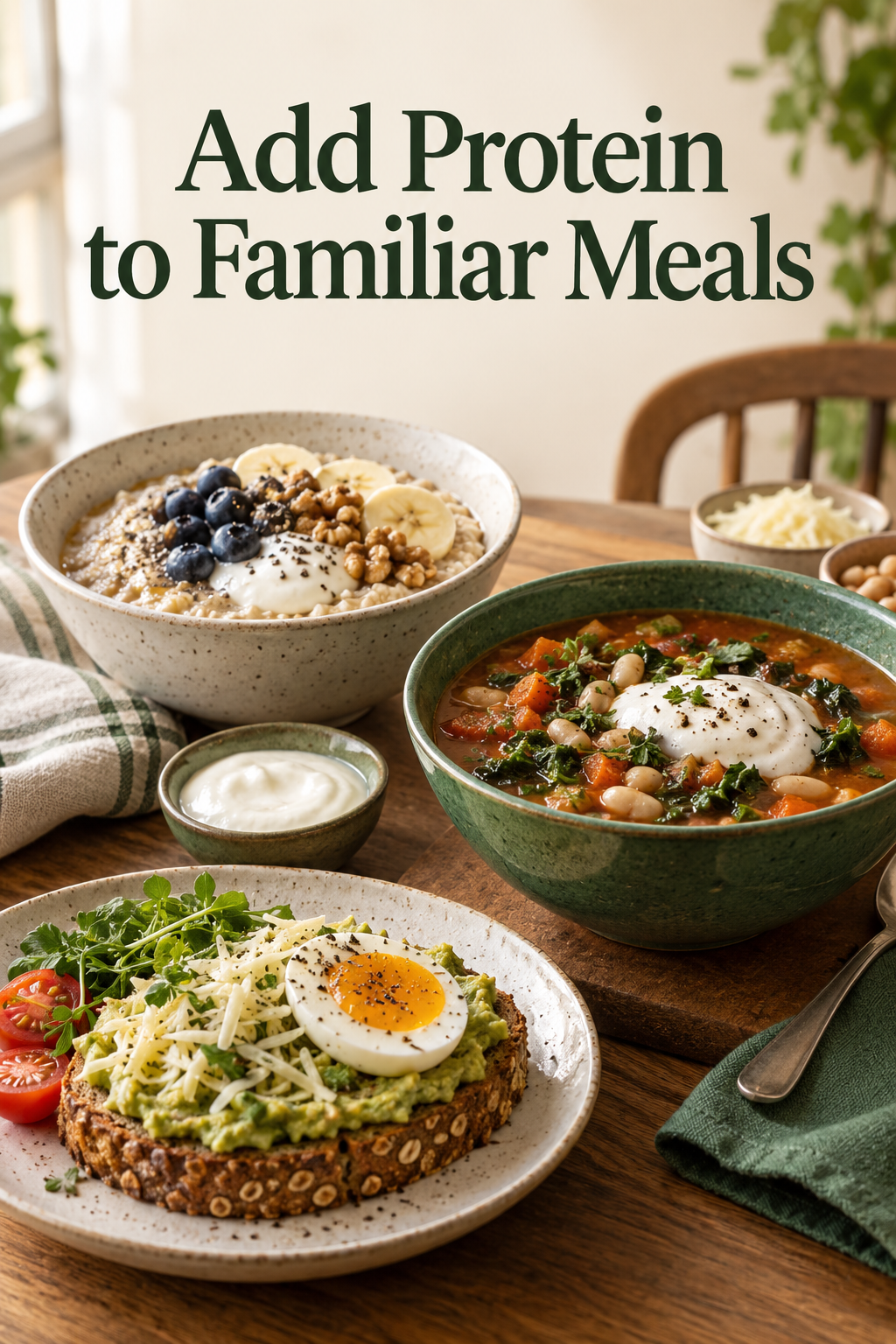
Adding protein does not require a new diet. It usually means finding the meals where bread, cereal, soup, pasta or vegetables are doing all the work, then adding one familiar food.
The five easiest upgrades
- Make porridge with milk and finish with thick yoghurt.
- Add eggs, tuna, chicken, tofu or beans to a salad.
- Stir lentils, beans or shredded meat into soup.
- Put fish, pulses, eggs or cheese beside a potato-based supper.
- Use yoghurt, cottage cheese or hummus to strengthen a snack.
Start with the blank meal
Write down your main protein food at each meal for three ordinary days. A blank is more useful than a perfect gram count: it points directly to the meal that needs attention. Breakfast and light lunches are common gaps.
Keep the meal, change one component
Toast can stay toast: add eggs, cottage cheese, beans or nut butter. Vegetable soup can stay soup: add lentils, beans, chicken or a yoghurt topping. Pasta can stay pasta: include tuna, minced meat, lentils or beans in the sauce. The aim is not to make every dish high-protein. It is to give each main meal a recognisable protein anchor.
Use convenience deliberately
Tinned fish, canned pulses, cooked chicken, eggs, yoghurt and frozen edamame are useful because they remove preparation. Compare salt levels where practical, rinse canned pulses, and keep two options that need no cooking.
Do not crowd out the rest of the plate
Protein belongs alongside vegetables or fruit and higher-fibre carbohydrates, not instead of them. NHS healthy-eating guidance still centres variety, fruit and vegetables, higher-fibre starchy foods and sensible portions.
Important limits
Needs vary with body size, appetite, activity and health. If you have kidney disease or medically managed nutrition needs, use the target given by your clinician or dietitian rather than a general older-adult recommendation.
Try a practical next step
The free Strong Table 10-recipe sampler gives you ten food-first meals to try before considering the full collection.
Sources
- British Nutrition Foundation. Protein: nutrition information.
- Bauer J, Biolo G, Cederholm T, et al. Evidence-based recommendations for optimal dietary protein intake in older people. JAMDA, 2013.
- NHS. 8 tips for healthy eating.
Sources and links reviewed on 15 September 2026.
General education only, not medical advice. Speak to a qualified professional before materially changing a medically managed diet.