 The Strength Years
Everyday eating
A practical plate for active ageing
A flexible visual guide for building satisfying meals around vegetables, protein and useful energy.
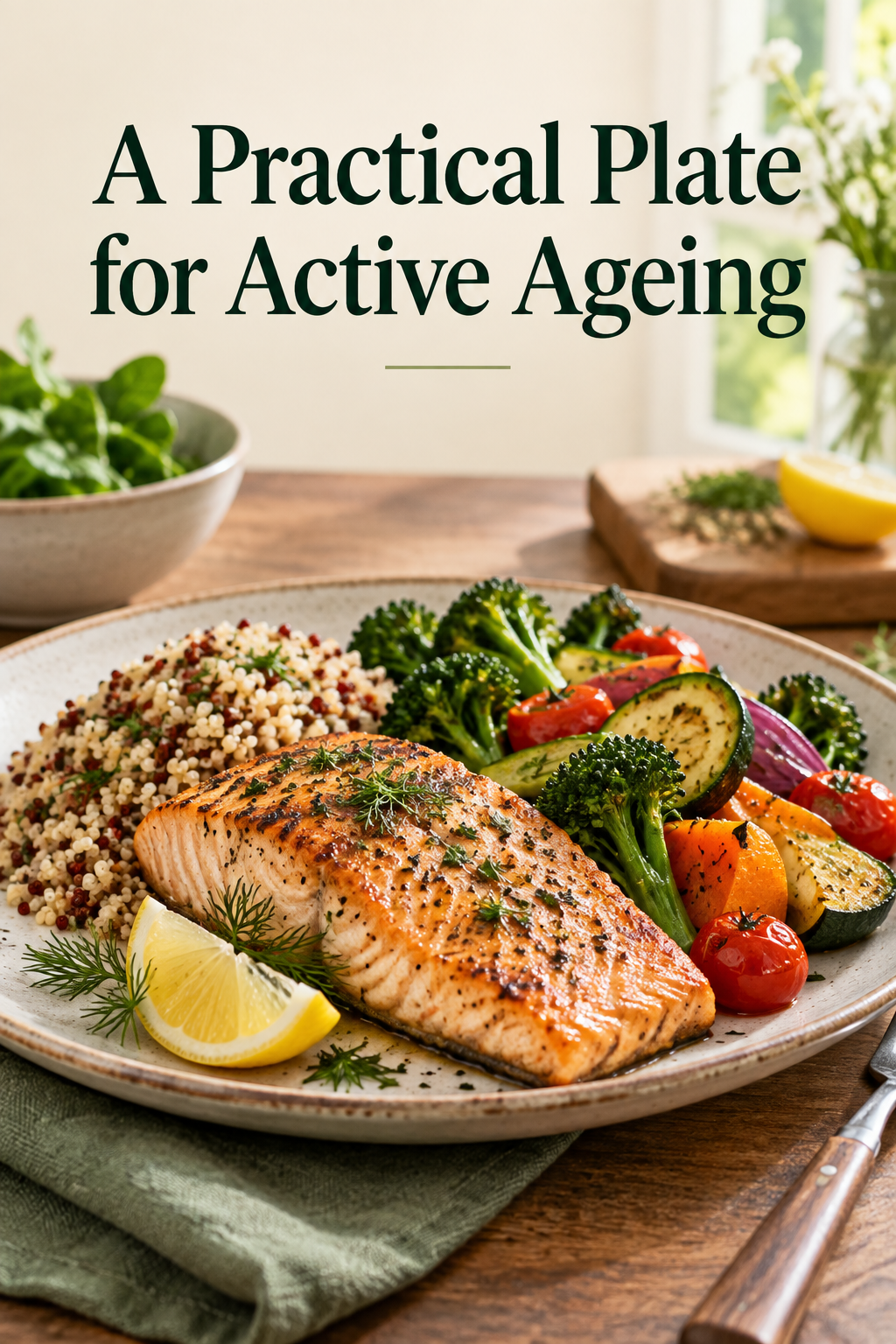
A useful plate guide should reduce decisions, not turn dinner into geometry. Think in three parts: plenty of vegetables, a clear protein food, and a portion of starchy carbohydrate that matches appetite and activity.
The flexible plate
- Vegetables or salad: make these prominent and vary the colours.
- Protein: fish, eggs, meat, dairy, beans, lentils, tofu or tempeh.
- Energy: potatoes, wholegrain bread, rice, pasta or another grain.
- Add flavour with herbs, spices, olive or rapeseed oil, yoghurt, nuts or seeds.
Why it works
The pattern keeps protein visible without pushing vegetables and higher-fibre carbohydrates aside. It also leaves room for culture, budget, appetite and the food already in the cupboard.
Adjust it to the day
After a long walk or strength session, a larger carbohydrate portion may be welcome. On a quieter day with a smaller appetite, keep the plate smaller rather than removing an entire food group. If weight loss is unintended, add energy with olive oil, cheese, yoghurt, avocado, nuts or an extra slice of bread.
Four plates, one pattern
- Salmon, new potatoes and green vegetables.
- Lentil stew, wholegrain bread and roasted vegetables.
- Chicken, brown rice and a large tomato-and-cucumber salad.
- Tofu, noodles and mixed stir-fried vegetables.
Use the week, not one perfect plate
No single meal needs every nutrient. Across the week, vary protein foods, include pulses, choose higher-fibre carbohydrates where they suit you, and follow NHS guidance on fruit, vegetables and fish. Enjoyment and repeatability are part of a healthy pattern.
Important limits
This plate is a planning tool, not a prescription. Diabetes, kidney disease, digestive conditions, poor appetite and unintended weight change can all alter what is appropriate.
Put the pattern into practice
The free Strong Table 10-recipe sampler offers ten examples built for real kitchens and ordinary weeks.
Sources
- British Nutrition Foundation. Protein: nutrition information.
- Bauer J, Biolo G, Cederholm T, et al. Evidence-based recommendations for optimal dietary protein intake in older people. JAMDA, 2013.
- NHS. 8 tips for healthy eating.
Sources and links reviewed on 15 September 2026.
General education only, not medical advice. Individual health conditions may require tailored nutrition support.