 The Strength Years
Practical nutrition
7 protein-rich breakfasts for adults over 50
Seven familiar breakfasts that make the first meal of the day do more work, without turning breakfast into a calculation.
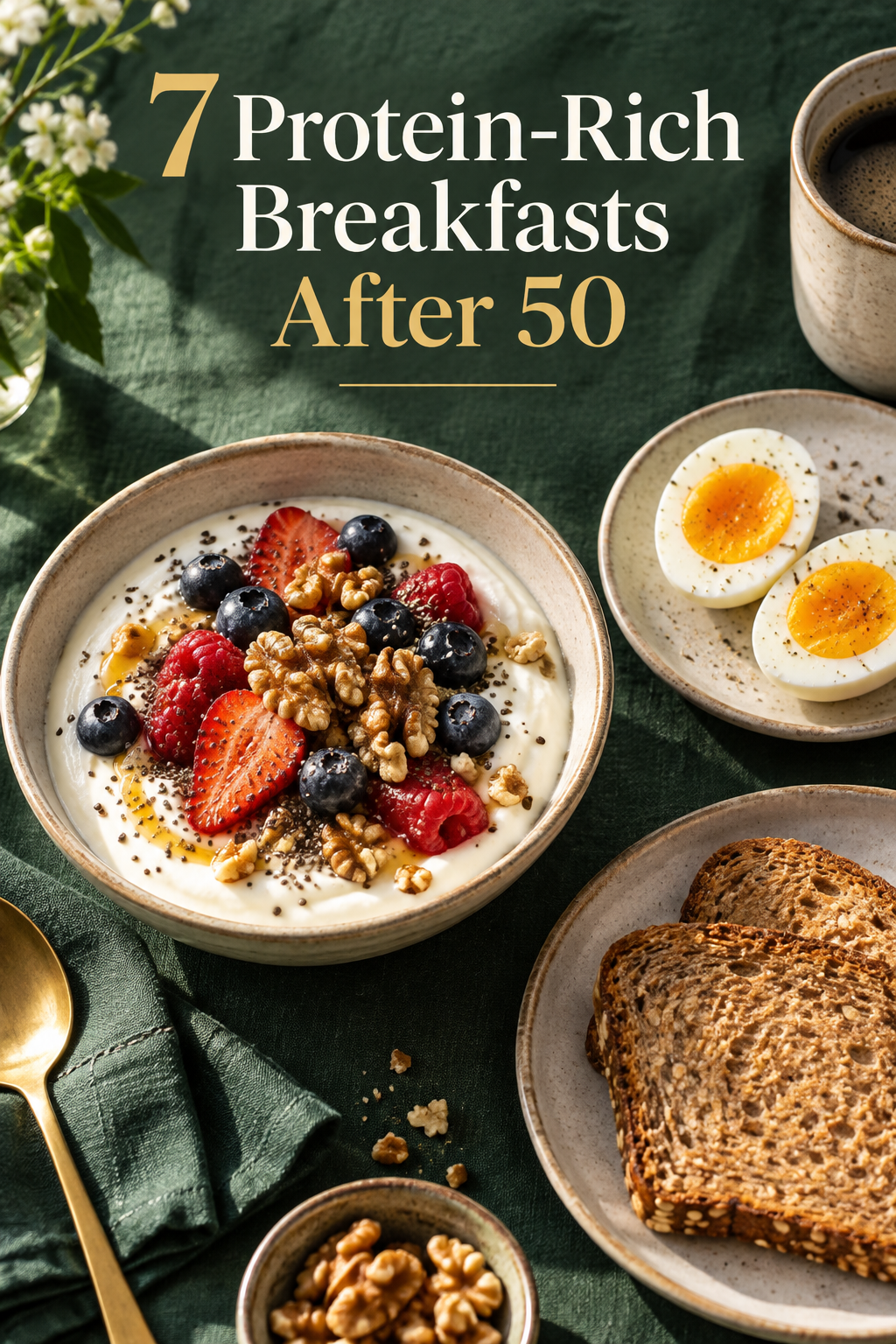
Breakfast is often the lightest protein meal of the day. Toast, cereal or fruit may be perfectly enjoyable, but on their own they leave most of the day's protein work to lunch and dinner.
That matters more with age. The UK adult reference intake is 0.75 grams of protein per kilogram of body weight each day. Expert groups focused on healthy older adults commonly recommend around 1.0 to 1.2 grams per kilogram, while stressing that needs vary with health, activity and recovery.12
The useful rule
- Build breakfast around one recognisable protein food.
- Add fruit, vegetables and higher-fibre carbohydrates rather than replacing them.
- Choose the breakfast you will repeat, not the one that looks most impressive.
- If you have kidney disease or medically managed protein needs, follow your clinician or dietitian's advice instead.
1. Greek yoghurt, berries and walnuts
Use a generous bowl of plain Greek yoghurt, then add berries, chopped walnuts and a spoonful of oats. The yoghurt does the protein work; the fruit, nuts and oats add flavour, texture and fibre. Check labels because protein content varies markedly between Greek-style products.
2. Two eggs on rye with tomatoes
Boiled, poached or scrambled eggs turn toast into a more substantial meal. Add grilled tomatoes, spinach or mushrooms and use wholegrain or rye bread where practical. Eggs are convenient, but the vegetables and bread stop the plate becoming protein-only.
3. Porridge made with milk, yoghurt and seeds
Make oats with dairy milk or an unsweetened fortified soya drink rather than water, then stir in a spoonful of thick yoghurt and top with pumpkin seeds. It keeps the familiarity of porridge while strengthening a meal that can otherwise be mostly carbohydrate.
4. Cottage cheese and tomato toast
Spread cottage cheese thickly on wholegrain toast and finish with sliced tomato, black pepper and herbs. This is quick, savoury and easy to scale to appetite. If cottage cheese is too salty for your needs, compare labels or use plain yoghurt and egg instead.
5. Smoked salmon, soft cheese and cucumber
Use a modest portion of smoked salmon with soft cheese, cucumber and rye or wholegrain bread. It is useful when you want a cold breakfast, although smoked fish can be high in salt. NHS guidance recommends at least two portions of fish a week, including one oily fish portion, but variety matters.3
6. Tofu scramble with spinach and tomatoes
Crumble firm tofu into a warm pan with turmeric, pepper, spinach and tomatoes. Serve it with wholegrain toast. Tofu provides a practical plant-based foundation and shows that a protein-aware breakfast does not have to depend on meat, eggs or dairy.
7. Beans and an egg on toast
Warm beans with tomatoes and spinach, then add an egg and serve over wholegrain toast. Choose a lower-salt bean product when available, or rinse canned beans. Pulses contribute protein and fibre, making this one of the most filling options in the list.
How to choose between them
Use three filters: appetite, preparation time and repeatability. A breakfast that takes 20 minutes when you normally have five is not a plan. Keep two weekday options and one slower weekend option, and rotate the main protein foods across the week.
Do not chase a precise number at every meal. The stronger habit is to notice whether breakfast contains a meaningful protein food at all. If it does not, add one. Our broader guide to protein after 50 explains how this fits into the whole day.
Important limits
These breakfasts support a balanced diet; they do not treat muscle loss or any medical condition. Protein works alongside resistance exercise, sufficient energy and overall diet quality.
Higher intake is not suitable for everyone. People with reduced kidney function may need an individual protein target, so generic older-adult figures should not override clinical advice.4
Try the food-first route
If these ideas suit your table, the free Strong Table 10-recipe sampler provides a practical next step. It lets you cook from the collection before deciding whether the complete book is useful to you.
Sources
- British Nutrition Foundation. Nutrition information about protein. Adult reference intake of 0.75 g/kg/day. Back to text
- Bauer J, Biolo G, Cederholm T, et al. Evidence-based recommendations for optimal dietary protein intake in older people. Journal of the American Medical Directors Association, 2013. Back to text
- NHS. 8 tips for healthy eating. Back to text
- University Hospitals of Leicester NHS Trust. Kidney health: eating well. Back to text
Sources and links reviewed on 14 September 2026.
This article is for general education and is not medical advice. If you have kidney disease, another medical condition or medically managed nutrition needs, speak to your doctor or dietitian before materially changing your protein intake.